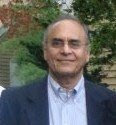
A lecture delivered by me in New York in March of this year. The lecture does not mention that India , China . Russia have made great strides in modern times by adopting Capitalism. Obviously Capitalism cannot be so bad except in all of these countries, the economic inequality of people is perpetuated. The rich become rich through access to power and once there they keep out the competition through access to power and capital. Adam Smith must be turning in his grave with disgust.
The idea of Islam presenting a better solution could be hilarious to many considering the lack of Islamic contributions to anything in modern times. I do believe Islam to be a very forward looking religion in spite of the retrogade practices of it's followers in recent times. I expect to write more in this subject in future. In the meantime feel free to circulate this lecture to your Capitalist friends.
Khusro
Date: Monday, March 31, 2008, 11:36 PM
Capitalism and Islam
Introduction
Capitalism is a modern concept for many practices which have been going on for centuries. In the olden days there was Feudalism which relied on a tribe financing itself with Taxes, levies and penalties. Then came Mercantilism which was the opening of new trade and new markets. This was backed by Governments and resulted in the discovery of America .
Islam practiced Capitalism mush earlier, between the 9th and 12 th Centuries. There were trading companies, Bills of Exchange, contracts, Mudarabas ( Limited Partnerships) Profit, Capital ( al-Mal).
The concept of private property was not introduced until the 15th – 18th Centuries. The economics of the world got modified as it moved from Agricultural to Maritime to Industrial societies.
As we know it today Capitalism means the right of an individual to become an entrepreneur for the purpose of making profit. This profit is made by making goods and services available to buyers in a free market environment where prices are set by supply and demand. It is assumed that a free market will allow competition which in turn will result in productivity and efficiency . It is assumed that there will be no Government intervention except to make sure that there is no cheating and the market is truly free.
Adam Smith, The rise of Capitalism
“Adam Smith's great book, The Wealth of Nations, was published in 1776, at a time when the power of free trade and competition as stimulants to innovation and progress was scarcely understood. Governments granted monopolies and gave subsidies to protect their own merchants, farmers and manufacturers against 'unfair' competition. The guilds operated stern local cartels: artisans of one town were prevented from travelling to another to find work. Local and national laws forbade the use of new, labour-saving machinery. And, not surprisingly to us today, poverty was accepted as the common, natural, and inevitable lot of most people. Adam Smith railed against this restrictive, regulated, 'mercantilist' system, and showed convincingly how the principles of free trade, competition, and choice would spur economic development, reduce poverty, and precipitate the social and moral improvement of humankind. To illustrate his concepts, he scoured the world for examples that remain just as vivid today: from the diamond mines of Golconda to the price of Chinese silver in Peru ; from the fisheries of Holland to the plight of Irish prostitutes in London . And so persuasive were his arguments that they not only provided the world with a new understanding of the wealth-creating process; they laid the intellectual foundation for the great era of free trade and economic expansion that dominated the Nineteenth Century. The Wealth of Nations changed our understanding of the economic world just as Newton 's Principia changed our understanding of the physical world and Darwin 's Origin of Species. “
Victory over Communism
After the second world war, Capitalism as represented by the US and Western Europe, clashed with Communism as represented by the USSR and Eastern Europe and for almost 50 years the cold war raged on as to which system would survive. As we know Capitalism was victorious and Communism collapsed and disintegrated. All this means is that Capitalism was better than Communism, to my mind it does not mean that Capitalism is the best Economic system. There are huge differences between the theory preached by Adam Smith and it's practice..
Nowhere in the world is it more seriously practiced than in the US . While Europeans are inclined to mix it with some form of Socialism, for the Americans it is almost a religious belief to keep it pure.
Does Capitalism create Wealth
Amongst the people rooting for free markets, competition and profits was myself until I became more aware of what was really driving Capitalism. It was not until I looked more deeply into Capitalism that I realized that the two things that were driving Capitalism as we know it are Greed and Exploitation. Individualism is driven by self interest and self interest is driven by selfishness.
True the glitter and riches that we see in the US appear to be fruits of Capitalism but the wealth that has been created has been through the exploitation of the labor of the poor and the downtrodden. The fundamental theory of Capitalism is to create surplus by exploiting the true price of labor. Stealing the land of the American Indian and profiting from the labor of the African Slave and then exploiting Mexican and South American Labor are the foundations of US Prosperity.
Does Capitalism create Poverty
Capitalism creates great wealth but only for a few. Today 1% of the worlds Population controls 80% of the worlds resources.( Vandana Shiva quoting from the Helsinki reports). The income distribution of Capitalism is so lopsided that Capitalism has actually created poverty. The Rich will keep getting richer and the poor will keep getting poorer. The rich once they achieve wealth also achieve power and they make sure that the rules are written in their favor. The Auto Industry in the US joined hands with the rubber and glass Industry to make sure that the railroad system never took off. The US has the most miserable public transport system because GM and the tire Industry made sure that people relied on cars for transportation.
The Defence Industry makes sure that there is a war every few years so that they can sell arms. The oil Industry created a revolution in Iran to make sure that oil prices were kept low.
We have been here before when the "System" tried to manipulate markets.
Silver ( 1980), When the Hunt's had begun accumulating silver back in 1973 the price was in the $1.95 / ounce range. Early in '79, the price was about $5. Late '79 / early '80 the price was in the $50's, peaking at $54.
The collapse of the silver market meant countless losses for speculators. The Hunt brothers declared bankruptcy. By 1987 their liabilities had grown to nearly $2.5 billion against assets of $1.5 billion. In August of 1988 the Hunts were convicted of conspiring to manipulate the market.
S& L Scandal The US Savings and Loan crisis of the 1980s and 1990s was the failure of several savings and loan associations in the United States. More than 1,000 savings and loan institutions (S&Ls) failed in "the largest and costliest venture in public misfeasance, malfeasance and larceny of all time."[1] The ultimate cost of the crisis is estimated to have totaled around USD$160.1 billion, about $124.6 billion of which was directly paid for by the U.S. government -- that is, the U.S. taxpayer, either directly or through charges on their savings and loan accounts-- [2], which contributed to the large budget deficits of the early 1990s.
The resulting taxpayer bailout ended up being even larger than it would have been because moral hazard and adverse-selection incentives compounded the system’s losses. [3]
The debts of Third World Countries ( 1983). In the 1960s and 1970s many Latin American countries, notably Brazil, Argentina, and Mexico, borrowed huge sums of money from international creditors for industrialization; especially infrastructure programs. These countries had soaring economies at the time so the creditors were happy to continue to provide loans. Between 1975 and 1982, Latin American debt to commercial banks increased at a cumulative annual rate of 20.4 percent. This heightened borrowing led Latin America to quadruple its external debt from $75 billion in 1975 to more than $315 billion in 1983, or 50 percent of the region's gross domestic product (GDP). Debt service (interest payments and the repayment of principal) grew even faster, reaching $66 billion in 1982, up from $12[ billion in 1975.[1]
1960s saw the US spend more than it had, resulting in the printing of more dollars.
Oil-producing countries, pegged to the dollar were affected as the value of the dollar decreased.
In 1973, the oil-producing countries hiked their prices as a result, earning a lot of money, which they put in to western banks.
Interest rates started to plummet resulting in more lending by banks to try and prevent a crisis.
A lot of the borrowed money went to western-backed dictators, resulting in little benefit for most people.
In 1982 Mexico defaulted on its debt payment, threatening the international credit system.
The IMF and World Bank stepped in to Mexico and other nations facing similar problems, prescribing their loans and structural adjustment policies to ensure debt repayment.
The poor have suffered the most as a result of the harsh conditions of structural adjustment.
the currencies of third world countries ( 1996), In 1996 international investors poured perhaps $100 billion into East Asia . East Asian economies were the darlings of the world capital market: it seemed as if everyone who wanted to lay claim to any financial sophistication was diversifying into these fast-growing economies. op-ed writers opine about "crony capitalism" and "unsustainable investment" and "weak financial systems" and "over lending. "
Enron ( 2001), “The rise and fall of Enron is an instant classic in the annals of capitalism because, in one calamitous stroke, it wipes out so many sanctified illusions that rule in the magic marketplace. Enron embodies Nobel-class hubris like that of the market sophisticates who brought Long-Term Capital Management to ruin in 1998. It also smells of the raw monopolistic greed common a century ago. An energy-trading company that Wall Street had valued at $80 billion ten months ago is now a penny stock.” - William Greider.
Stockholders lost $60 billion in market value, long-serving employees lost more than $2 billion in pension money, and 5,600 people lost their jobs.
In just 15 years, Enron grew from nowhere to be America 's seventh largest company, employing 21,000 staff in more than 40 countries. But the firm's success turned out to have involved an elaborate scam. Enron lied about its profits and stands accused of a range of shady dealings, including concealing debts so they didn't show up in the company's accounts.
There was widespread collusion between Banks, Auditors and Enron’s management to perpetrate this fraud.
Sub prime loans. 2007 Sub prime lending is a general term that refers to the practice of making loans to borrowers who do not qualify for market interest rates because of problems with their credit history or the inability to prove that they have enough income to support the monthly payment on the loan for which they are applying.
The value of U.S. sub prime mortgages was estimated at $1.3 trillion as of March 2007, [10] with over 7.5 million first-lien sub prime mortgages outstanding. [11]Approximately 16% of sub prime loans with adjustable rate mortgages (ARM) were 90-days delinquent or in foreclosure proceedings as of October 2007, roughly triple the rate of 2005. [12] By January of 2008, the delinquency rate had risen to 21%.
The Government, the regulators, the rating agencies were all complicit in creating a crisis which now dwarfs other financial crises.
Colonisations have all exploited the colonised, whether it was by the Ottomans, the British, The French, The Belgians, the Spaniards, the Dutch or the Americans. The colonisation of the American Indian or of Black Africa or of India never benefited the colonised but enriched the coloniser beyond all reason.
The theme of greed, fraud, exploitation and collusion runs through all the above examples.
Capitalism has become a disease. There is no free market, there are simply monopolies. More over Capitalism has become Imperialism.
Capitalism and Islam
What I call run away Capitalism, What Naomi Klein calls Disaster Capitalism and Dr Reich calls Super Capitalism cannot be recognized by Islam. Greed and Exploitation are considered sin in Islam and virtues in Capitalism. The short term benefits of Capitalism have created long term disasters for mankind. The erosion of the environment, the stealing of other peoples land and resources, the creation of mass poverty are crimes of the highest order.
The urgent need to replace Capitalism
They are there because the culture of God has been replaced by a culture of Materialism. All the benefits of Capitalism vanish when Capitalism becomes master and the Capitalist becomes the slave.
Today Islam has no greater role to play than to come up with an alternative to a system that is no longer in the hands of the Capitalist, it has become the god of the Capitalist. While we can say that the goal of the Capitalist is to make money, let us leave them alone and get on with the other issues, it might have been fine, but Capitalism’s corrosive effect is so deep that it has tainted Democracy and other things valued by Humans. Today there is so much money in Democracy that the representatives are no longer the representatives of people but represent Corporations. The media is owned by Capitalists , who write what sells their ads rather than what is real news.
The role of Islam
This is a tall order. What we want to address is not just Capitalism but Imperialism, Journalism, Democracy and Poverty. Before we do that let us salute the energy generated by greed. The profit motive has unleashed the desire to take risk and innovate. Islam encourages Entrepreneurship, it encourages profits, it encourages risk taking and innovation. The question is, is greed the only way to make this happen. The question is are human beings driven by self interest or are they driven by something bigger than themselves.
That is the contribution that Islam has to make. Islam says and Allah says Worship me and no other. Islam says, the return is to Allah. The wealth that you create will not go with you. The end of life is not how big your house will be or how many cars you will own. The end will be determined by whether you have cheated, killed, exploited your fellow humans and how you will be held accountable for it.
If Islam were defining the issues, it would be a war on Poverty and not a war on Terrorism. Terrorism is a by product of the exploitation of the poor and the weak. It is a by product of the injustices of Imperialism. The answer is not to kill the poor but to recognize injustice and address it.
How can we even begin to address an alternative to Capitalism when Islam today funds the war on terrorism? Saudi Arabia through funds and Pakistan through it’s army are in the forefront of the fight to kill other Muslims. We have a long way to go before we can all get on the same agenda.
,,,,,,,,,,,, ,,,,,,,,, ,,,,,,,,, ,,,,,,,,, ,,,,,,,,, ,,,,,,,,, ,,,,,,,,, ,,,,,,,,, ,,,,,,,,, ,,,,,,,,, ,,,,,,,,, ,,,,,,,,, ,,,,,,,,, ,,,,,,,,, ,,,,,,,,, ,,,,,,,,,
__._,_.___
Wednesday, July 9, 2008


Saturday, June 28, 2008
The US as a debtor nation
By 2007 total indebtedness was three times the size of the gross domestic product, a ratio that surpassed the record set in the years of the Great Depression. From 2001 to 2007 alone, domestic financial debt grew to $14.5 trillion from $8.5 trillion, and home mortgage debt ballooned to almost $10 trillion from $4.9 trillion, an increase of 102 percent. A crisis in the mortgage market in August 2007 brought the party to an end.
What happens when creditors decide to pull out their money? It could happen in the form of gradual withdrawals or it could happen like a Bank run. I believe the time to panic is now rather than when there is a run.
Khusro
The problem actually started in the mid eighties when the US within a very few years turned from being the largest creditor nation to the largest debtor. Consumer overspending financed by mounting foreign debt (then called the ‘ Twin Towers ’). One result - the stock market crash of 1987 and a shakeout in the financial markets.
Now the debt has grown hugely, but by a strange twist the creditor nations- BRIC ( Brazil , Russia , India and China ) and the larger oil producing countries are more hostages to the US than the other way round. They cannot shift much of the reserves. No country is economically large enough and everyone (incl. the most likely candidate, the EEC with their Euro) is unwilling to allow their currency to be used as a reserve currency.
So the creditors are stuck with the US $ and they will resist a precipitate decline in the US $ or any kind of run.
Of course, there is a desperate search for investment diversification (by the creditor nations) which bodes well for some developing countries, e.g. massive real estate, incl., more recently, agricultural land in Pakistan
Regards
Kemal Shoaib
What happens when creditors decide to pull out their money? It could happen in the form of gradual withdrawals or it could happen like a Bank run. I believe the time to panic is now rather than when there is a run.
Khusro
The problem actually started in the mid eighties when the US within a very few years turned from being the largest creditor nation to the largest debtor. Consumer overspending financed by mounting foreign debt (then called the ‘ Twin Towers ’). One result - the stock market crash of 1987 and a shakeout in the financial markets.
Now the debt has grown hugely, but by a strange twist the creditor nations- BRIC ( Brazil , Russia , India and China ) and the larger oil producing countries are more hostages to the US than the other way round. They cannot shift much of the reserves. No country is economically large enough and everyone (incl. the most likely candidate, the EEC with their Euro) is unwilling to allow their currency to be used as a reserve currency.
So the creditors are stuck with the US $ and they will resist a precipitate decline in the US $ or any kind of run.
Of course, there is a desperate search for investment diversification (by the creditor nations) which bodes well for some developing countries, e.g. massive real estate, incl., more recently, agricultural land in Pakistan
Regards
Kemal Shoaib
"Since 2001, the US share of world gross domestic product has fallen from 34 per cent to 28 per cent, while that of the Brics has risen from 8 per cent to 16 per cent. China’s reserves have rocketed from $200bn to $1,800bn, Brazil’s from $35bn to $200bn, Russia’s from $35bn to $500bn and India’s from $50bn to $300bn. World oil consumers have transferred more than $3,000bn to exporters. Because of America’s very low savings rate and heavy reliance on credit, US consumers, companies, financial institutions and the federal government must borrow heavily from these countries. The dollar now has a world-class competitor, the euro, which accounts for nearly 30 per cent of all international currency reserves, a proportion rising fast. And US trade, especially with emerging economies, is climbing as a portion of GDP, with fast-growing exports now giving the economy a desperately needed boost."
There is an unmistakable trend of wealth shifting from West to East. For the time being the Creditors might be hostage to the US but that is a matter of time as alternate markets start developing. A crisis of confidence in the US is helping to accelerate the search for alternates. The seven years since Sept 11 or the seven years of Bush, whichever way you want to look at it have decimated the US Economy, but in truth the decline has been going on for much longer. With every passing day, my prediction, that the Dow will soon hit 11,000 and the Euro will soon equal 2 dollars, is coming closer to realisation.
Khusro
Capital Flow From Emerging Nations To U.S. Poses Some Risks
By Michael M. Phillips
Word Count: 979
Washington
The U.S. has long depended on the kindness of strangers to finance its import bill. These days, those strangers are likely to be in China , Brazil , Mexico or some other emerging nation.
The U.S. has to import, on net, almost $2 billion in capital a day to cover its enormous trade gap. Of the $920 billion that foreigners pumped into U.S. stocks, bonds and government securities last year, $361 billion -- a stunning 39% -- came from emerging-market nations, according to calculations by Bank of America, using Treasury Department data.
China alone accounted for 21 percentage points of the ...
....Foreigners earned an average annual return of 4.3% on their US Investments, while Americans earned 11.2% on their Investments overseas. .... "They're probably questioning the efficiency of our financial markets"....
..Further more , the US finds not only dependent on money from the developing world, but in large parts dependent on money from Governments- and undemocratic ones.
Friday, June 27, 2008
Are there multiple roads to salvation- A discussion
"On some basics, the American faithful are much alike. Ninety-two percent believe in God, including 70 percent of those not connected with any religion. Three-quarters believe in life after death, and 79 percent believe in miracles. "
The issues posed are serious but I doubt if the answers are given that seriously. I have doubts about the value of these statistics although from my point of view the results are very encouraging. As I move amongst mainstream American Society I am surprised at the number of people with a conscience and this too is eye opening.
Belief in God, unless it is accompanied by an accompanying belief in all Humanity, is theoretical. I see less evidence of that. Materialism is a competing god and I don't know how these statistics reconcile the two gods.
Khusro
In (almost) all spheres of life it requires extraordinary arrogance to believe in ones own monopoly of the truth.
The same is true of Religion. In my personal experience, Muslims will reluctantly admit that People of the Book have a chance of salvation. Beyond that……………As for Hinduism, they openly deride the many (to outsiders) strange, even barbaric practices.
Forgetting, the huge amount of spiritually advanced thinking and texts in Hinduism, Buddhism, Shintoism, Taoism, Confucianism etc. that have enlightened their adherents and enriched all mankind for ever
Regards
Kemal Shoaib
Regards,-Kalim
I agree that all people living in Pluralistic Societies are helped including Muslims whose own societies are very restrictive. There is a lot that Muslims should learn from the West. There was a time when it was the Muslims who had Pluralistic Societies and it was Christian Societies that were bigoted. How times have changed. Did the West learn from the Muslims or did they rediscover Pluralism, which their own religion had always advocated?
My reference to Materialism is to that form that reveres materialism as the ultimate measure of life's success. This is where people worship at the alter of materialism. The US is the biggest example of such a culture. While pluralism and tolerance are virtues of this society, rampant materialism is a curse that is eating away at the very foundations of it. The lack of ethics, the double standards, the brazen exploitation of the vulnerable are part of the corporate driven culture which values profits over every thing else. This is what I would want to change about the US. There is not enough awareness of this malaise. China and India are headed in the same direction. Whether in this process they will lose their soul remains to be seen, but there is a good chance.
Khusro---
Forward from the Christian Science Monitor: latest report from the US Religious Landscape Survey. http://origin.csmonitor.com/2008/0624/p02s01-ussc.htmlExcerpt:<<...belief, and practice do not line up the way theologians might want them to line up," ......Indeed, in a step that may unsettle orthodox believers but bodes well for American pluralism,large majorities in nearly every tradition reject religious exclusivity and say that "many religions can lead to eternal life." Only 16 percent of Roman Catholics and 36 percent of Evangelicals, for example, say that "my religion is the one true faith" leading to salvation. Similarly, more than two-thirds of adults with a religious affiliation believe there's more than one true way to interpret the teachings of their own faith...[On this question Muslims split a favorable 56% to 33%, contrasted with the Mormons and the Jehovah's Witnesses, the only groups with a majority believing theirs is the only true path]...Yet divergent perspectives coexist within many traditions. In regard to the conception of God, 60 percent of Americans believe in a personal God, while 25 percent believe in an impersonal force or universal spirit. Eastern Orthodox Christians split 49 to 34 percent on this question, while Muslims divide evenly, 41 to 42 percent. Among Jews, 25 percent believe in a personal God and 50 percent in an impersonal force..>>.
SOURCE: Pew Forum on Religion & Public Life/Rich Clabaugh–STAFFNew findings about U.S. religious lifePractices do not always line up as theologians may expect, a Pew Forum survey finds.
By Jane Lampman Staff writer of The Christian Science Monitor
from the June 24, 2008 edition
Reporter Jane Lampman discusses the Pew Forum on Religion & Public Life's survey of America's religious landscape.
Religion is a vital force in the private and public lives of most Americans and helps mold the country's social and political attitudes, says the latest report from the US Religious Landscape Survey.
Religious freedom has given that vitality free rein. And for most, convictions are matters of personal choice and not necessarily from the tradition in which one was raised. The pathbreaking survey of a representative sample of 35,000 adults has revealed an unprecedented shifting of people among religious affiliations in recent decades. It also shows a remarkable diversity of beliefs and practices – within as well as across faiths.
"While there are important differences between religious traditions, affiliation, belief, and practice do not line up the way theologians might want them to line up," says John Green, senior fellow at Pew Forum on Religion and Public Life, which carried out the survey.
Indeed, in a step that may unsettle orthodox believers but bodes well for American pluralism, large majorities in nearly every tradition reject religious exclusivity and say that "many religions can lead to eternal life." Only 16 percent of Roman Catholics and 36 percent of Evangelicals, for example, say that "my religion is the one true faith" leading to salvation. Similarly, more than two-thirds of adults with a religious affiliation believe there's more than one true way to interpret the teachings of their own faith.
"Americans recognize that we do live in a much more complicated landscape than we used to," says Alan Wolfe, director of the Boisi Center for Religion and American Public Life at Boston College.
The survey has been released in two stages. The first report, in February, documented the extraordinary switching among denominations, faiths, and a growing "unaffiliated" category. It also showed that Protestantism is close to losing its majority status in the United States. The second report, released Monday, details the beliefs and practices of people of all traditions – including world faiths and the unaffiliated – and analyzes their impact on social and political views.
"The unaffiliated have a diversity of belief that no one knew existed," says Mark Gray of the Center for Applied Research in the Apostolate at Georgetown University in Washington. For instance, 35 percent of them pray at least weekly, including 10 percent of atheists and 18 percent of agnostics.
On some basics, the American faithful are much alike. Ninety-two percent believe in God, including 70 percent of those not connected with any religion. Three-quarters believe in life after death, and 79 percent believe in miracles.
Prayer is a widespread practice, in which 75 percent engage at least weekly and 58 percent daily. Thirty-four percent say they have experienced or witnessed a divine healing of an illness or injury.
Yet divergent perspectives coexist within many traditions. In regard to the conception of God, 60 percent of Americans believe in a personal God, while 25 percent believe in an impersonal force or universal spirit. Eastern Orthodox Christians split 49 to 34 percent on this question, while Muslims divide evenly, 41 to 42 percent. Among Jews, 25 percent believe in a personal God and 50 percent in an impersonal force.
An aspect of practice that often spurs critiques about the depth of American faith relates to sacred texts. While believers hold their scriptures in high esteem – 63 percent call them the word of God – nearly half (45 percent) say they seldom or never read them outside of worship services. That rises to 57 percent for Catholics and 70 percent for Jews. Jehovah's Witnesses and Mormons are the most avid scripture readers, followed by black Protestants and Evangelicals.
"Since our major religions are religions of the book, that's notable," says Professor Wolfe. "The religious revival in America isn't what you could call the old-time religion that has serious theological content or biblical knowledge."
Views differ also on whether the texts should be taken literally. Sixty percent of Evangelicals take the Bible as the literal word of God, while 23 percent of mainline Christians and 22 percent of Catholics do. Fifty percent of Muslims take the Koran literally. On the other hand, 67 percent of Buddhists, 53 percent of Jews, and 47 percent of Hindus say their scriptures are written by men, not God.
While Americans take their religion seriously (more than half say it is very important in their lives), it's not the first place they say they go when making moral choices or deciding on political views.
The survey finds that significant majorities in every tradition and among the unaffiliated agree that there are "absolute standards of right and wrong." When asked where they look for guidance, 52 percent say they count on practical experience and common sense, 29 percent cite religious teachings, and 9 percent point to reason or philosophy.
Similarly, relatively few say they look to religion as the primary source of their views on social and political issues. The survey found links, however, suggesting that religion may play more of a role, perhaps indirectly, than many recognize.
This is most visible with regard to political ideology, where those who are very active religiously tend to be more politically conservative than other Americans. Religion plays an obvious role on social issues such as abortion and homosexuality, yet it also shapes worldviews that affect attitudes on many issues.
The survey found widespread agreement across religious communities on the need for "more government support for the needy, even if it means going into debt."
Environmental protection also gains widespread backing. Majorities in most groups also said good diplomacy rather than military strength was "the best way to ensure peace."
The issues posed are serious but I doubt if the answers are given that seriously. I have doubts about the value of these statistics although from my point of view the results are very encouraging. As I move amongst mainstream American Society I am surprised at the number of people with a conscience and this too is eye opening.
Belief in God, unless it is accompanied by an accompanying belief in all Humanity, is theoretical. I see less evidence of that. Materialism is a competing god and I don't know how these statistics reconcile the two gods.
Khusro
In (almost) all spheres of life it requires extraordinary arrogance to believe in ones own monopoly of the truth.
The same is true of Religion. In my personal experience, Muslims will reluctantly admit that People of the Book have a chance of salvation. Beyond that……………As for Hinduism, they openly deride the many (to outsiders) strange, even barbaric practices.
Forgetting, the huge amount of spiritually advanced thinking and texts in Hinduism, Buddhism, Shintoism, Taoism, Confucianism etc. that have enlightened their adherents and enriched all mankind for ever
Regards
Kemal Shoaib
. Survey of America's religious landscape, that purportedly "bodes well for American pluralism" and that [Muslims split a favorable 56% to 33%, contrasted with the Mormons and the Jehovah's Witnesses, the only groups with a majority believing theirs is the only true path]. The above observation as re the Muslims came as an unexpected and pleasant surprise for me.In my view that is very much the result of the Muslims having lived and benefited immensely from the freedom of thought and life style in their adopted pluralistic, multi religious and secular countries. I wonder what would be the proportional break down among Muslims in the UK. I can make a fairly good and unflattering guess as re the Muslim majority countries. I very much doubt it would be even remotely as favorable as that in the US survey. Muslims have assigned themselves an almost a pathological right of superiority and exclusivity to such an absolute degree even when it comes to multitudes of intra Islamic sects and sub sects, let alone granting any wiggle room to non- Muslims' humanity and respective faiths.Unlike some of the comments, I am impressed and absolutely not surprised at the number of people with a conscience in the mainstream American society. And, in my opinion, leaving aside individuals, at the societal level materialism is as prevalent in the East as in the West.
Regards,-Kalim
I agree that all people living in Pluralistic Societies are helped including Muslims whose own societies are very restrictive. There is a lot that Muslims should learn from the West. There was a time when it was the Muslims who had Pluralistic Societies and it was Christian Societies that were bigoted. How times have changed. Did the West learn from the Muslims or did they rediscover Pluralism, which their own religion had always advocated?
My reference to Materialism is to that form that reveres materialism as the ultimate measure of life's success. This is where people worship at the alter of materialism. The US is the biggest example of such a culture. While pluralism and tolerance are virtues of this society, rampant materialism is a curse that is eating away at the very foundations of it. The lack of ethics, the double standards, the brazen exploitation of the vulnerable are part of the corporate driven culture which values profits over every thing else. This is what I would want to change about the US. There is not enough awareness of this malaise. China and India are headed in the same direction. Whether in this process they will lose their soul remains to be seen, but there is a good chance.
Khusro---
Forward from the Christian Science Monitor: latest report from the US Religious Landscape Survey. http://origin.csmonitor.com/2008/0624/p02s01-ussc.htmlExcerpt:<<...belief, and practice do not line up the way theologians might want them to line up," ......Indeed, in a step that may unsettle orthodox believers but bodes well for American pluralism,large majorities in nearly every tradition reject religious exclusivity and say that "many religions can lead to eternal life." Only 16 percent of Roman Catholics and 36 percent of Evangelicals, for example, say that "my religion is the one true faith" leading to salvation. Similarly, more than two-thirds of adults with a religious affiliation believe there's more than one true way to interpret the teachings of their own faith...[On this question Muslims split a favorable 56% to 33%, contrasted with the Mormons and the Jehovah's Witnesses, the only groups with a majority believing theirs is the only true path]...Yet divergent perspectives coexist within many traditions. In regard to the conception of God, 60 percent of Americans believe in a personal God, while 25 percent believe in an impersonal force or universal spirit. Eastern Orthodox Christians split 49 to 34 percent on this question, while Muslims divide evenly, 41 to 42 percent. Among Jews, 25 percent believe in a personal God and 50 percent in an impersonal force..>>.
SOURCE: Pew Forum on Religion & Public Life/Rich Clabaugh–STAFFNew findings about U.S. religious lifePractices do not always line up as theologians may expect, a Pew Forum survey finds.
By Jane Lampman Staff writer of The Christian Science Monitor
from the June 24, 2008 edition
Reporter Jane Lampman discusses the Pew Forum on Religion & Public Life's survey of America's religious landscape.
Religion is a vital force in the private and public lives of most Americans and helps mold the country's social and political attitudes, says the latest report from the US Religious Landscape Survey.
Religious freedom has given that vitality free rein. And for most, convictions are matters of personal choice and not necessarily from the tradition in which one was raised. The pathbreaking survey of a representative sample of 35,000 adults has revealed an unprecedented shifting of people among religious affiliations in recent decades. It also shows a remarkable diversity of beliefs and practices – within as well as across faiths.
"While there are important differences between religious traditions, affiliation, belief, and practice do not line up the way theologians might want them to line up," says John Green, senior fellow at Pew Forum on Religion and Public Life, which carried out the survey.
Indeed, in a step that may unsettle orthodox believers but bodes well for American pluralism, large majorities in nearly every tradition reject religious exclusivity and say that "many religions can lead to eternal life." Only 16 percent of Roman Catholics and 36 percent of Evangelicals, for example, say that "my religion is the one true faith" leading to salvation. Similarly, more than two-thirds of adults with a religious affiliation believe there's more than one true way to interpret the teachings of their own faith.
"Americans recognize that we do live in a much more complicated landscape than we used to," says Alan Wolfe, director of the Boisi Center for Religion and American Public Life at Boston College.
The survey has been released in two stages. The first report, in February, documented the extraordinary switching among denominations, faiths, and a growing "unaffiliated" category. It also showed that Protestantism is close to losing its majority status in the United States. The second report, released Monday, details the beliefs and practices of people of all traditions – including world faiths and the unaffiliated – and analyzes their impact on social and political views.
"The unaffiliated have a diversity of belief that no one knew existed," says Mark Gray of the Center for Applied Research in the Apostolate at Georgetown University in Washington. For instance, 35 percent of them pray at least weekly, including 10 percent of atheists and 18 percent of agnostics.
On some basics, the American faithful are much alike. Ninety-two percent believe in God, including 70 percent of those not connected with any religion. Three-quarters believe in life after death, and 79 percent believe in miracles.
Prayer is a widespread practice, in which 75 percent engage at least weekly and 58 percent daily. Thirty-four percent say they have experienced or witnessed a divine healing of an illness or injury.
Yet divergent perspectives coexist within many traditions. In regard to the conception of God, 60 percent of Americans believe in a personal God, while 25 percent believe in an impersonal force or universal spirit. Eastern Orthodox Christians split 49 to 34 percent on this question, while Muslims divide evenly, 41 to 42 percent. Among Jews, 25 percent believe in a personal God and 50 percent in an impersonal force.
An aspect of practice that often spurs critiques about the depth of American faith relates to sacred texts. While believers hold their scriptures in high esteem – 63 percent call them the word of God – nearly half (45 percent) say they seldom or never read them outside of worship services. That rises to 57 percent for Catholics and 70 percent for Jews. Jehovah's Witnesses and Mormons are the most avid scripture readers, followed by black Protestants and Evangelicals.
"Since our major religions are religions of the book, that's notable," says Professor Wolfe. "The religious revival in America isn't what you could call the old-time religion that has serious theological content or biblical knowledge."
Views differ also on whether the texts should be taken literally. Sixty percent of Evangelicals take the Bible as the literal word of God, while 23 percent of mainline Christians and 22 percent of Catholics do. Fifty percent of Muslims take the Koran literally. On the other hand, 67 percent of Buddhists, 53 percent of Jews, and 47 percent of Hindus say their scriptures are written by men, not God.
While Americans take their religion seriously (more than half say it is very important in their lives), it's not the first place they say they go when making moral choices or deciding on political views.
The survey finds that significant majorities in every tradition and among the unaffiliated agree that there are "absolute standards of right and wrong." When asked where they look for guidance, 52 percent say they count on practical experience and common sense, 29 percent cite religious teachings, and 9 percent point to reason or philosophy.
Similarly, relatively few say they look to religion as the primary source of their views on social and political issues. The survey found links, however, suggesting that religion may play more of a role, perhaps indirectly, than many recognize.
This is most visible with regard to political ideology, where those who are very active religiously tend to be more politically conservative than other Americans. Religion plays an obvious role on social issues such as abortion and homosexuality, yet it also shapes worldviews that affect attitudes on many issues.
The survey found widespread agreement across religious communities on the need for "more government support for the needy, even if it means going into debt."
Environmental protection also gains widespread backing. Majorities in most groups also said good diplomacy rather than military strength was "the best way to ensure peace."
Sunday, April 6, 2008
Materialism and America
Excerpt
"..many Americans agree that moral decline is a serious risk in all the modern democracies, and most would trace the virus ultimately to a view asserting that material life is all there is to existence. Philosophical materialism puts self-interest before all else, and denies the existence of higher callings from God. This easily leads to pleasure-seeking, selfishness, and hedonism,.."
Editorial Comment
As individuals Americans are amongst the most decent people that I have come across any where. They are open, honest and plain spoken. Yet they are also victims of the society that they have created. It is a society that has walled itself off from the rest of the world and has started to believe in it's own propaganda about itself. This propaganda believes in America's superiority over others and is developing notions of being the good guys.
Materialism is not seen as a bad thing. In fact the Americans don't know anything different from Materialism and self interest. If there is a cultural war going on in America against Materialism, I am not aware of it.
Quite aside from what Muslims may think of all this and they have a lot of their own issues to deal with, Materialism will result in the moral destruction of the coming generations Of America as well as its Economic downfall. As the worlds largest consumers of just about everything, Americans are hugely wasteful of the worlds resources. The money that they spend on bottled water is enough to provide clean water to the rest of the world. The "other America" that Akyol talks about is a shadow of it's former self.
What self interest has taught America is to have a system and then follow it for the general good of Society. In that way they are extremely diligent. However they suffer when they get bad leaders because they follow their leaders blindly. Their respect for the system is admirable but their vision of life as being nothing but a good standard of living is very short sighted. They have been recently exposed to the insecurity of the unstructured world by leaving the security of their structured world and they are at their wits end as to how to operate in this new environment.
They are unused to the idea that if there is a clash between American interests and the interests of the rest of the world then American interests need not prevail. They are unused to the idea that winning is not everything. They are unused to the idea, that the mantle of a super power has to be earned and does not depend on how strong you are militarily.
Khusro
Show Us More of The Other America
[Originally published in The American Enterprise magazine, also available in PDF]
"Why do you hate us?" Since the horrendous events of 9/11, Americans have been posing that question to Muslims across the globe. The first answer from someone like me, who is repulsed by terrorists who kill in the name of Islam, is that most of us do not hate you. Yet it must be acknowledged that radical Muslim rage is real in many countries.
This rage is often irrational and ill founded. There is, however, one crucial source of anti-Americanism that is built on a genuine threat. Many Muslims are put off by the moral decline that seems to have pervaded American culture during the second half of the twentieth century. They worry that it will be exported to their own children and societies.
In truth, American moral values are in much better shape than a glance at U.S. television or other indicators might have one believe. Crime, divorce, welfare dependency, illegitimacy, abortion, drug use, and many other ills have actually fallen significantly from their peaks alter 1960s- and '70s-style liberation swept U.S. culture. Still, many Americans agree that moral decline is a serious risk in all the modern democracies, and most would trace the virus ultimately to a view asserting that material life is all there is to existence. Philosophical materialism puts self-interest before all else, and denies the existence of higher callings from God. This easily leads to pleasure-seeking, selfishness, and hedonism, and the consequences are horrifying to many devout Muslims around the world. Through American popular culture such as Hollywood movies, MTV, or pornography, they encounter a culture in which God and religious principles seem to be disrespected, neglected, even attacked or ridiculed.
In his recent book, Why the Rest Hates the West, historian Meic Pearse notes that many people around the globe see Western societies as being ones that "derogate religion, exalt triviality (sports, entertainment, fashion), endorse sexual shamelessness, deprecate family, and discard honor." Pearse argues that these tendencies do indeed have bad results: "social atomization; personal irresponsibility; dehumanizing impersonality; and other wounds to traditional families, communities, and conceptions of the person."
"The al-Qaeda hijackers did not target the Vatican, the capital of Western Christianity, " notes writer David Kelley, but rather the World Trade Center, "a temple of modernity." He points out that "Hamas's suicide bombers usually attack Israeli pizza parlors, hotels, and nightclubs, not synagogues." Kelley (who is himself an atheist) concludes that "Islamist hatred of the West is not directed at Christianity as a rival religion but at modernism as an alternative to religion as such."
But of course, the West is not monolithic. Materialism is just one side of the West—-on the other side, Judeo-Christianity stands firm. This state of affairs is evident only vaguely in Europe, but crystal clear in America. Americans possess one of the most religious societies in the world, and in fact the world's most determined battle against materialism—on cultural, philosophical, and scientific grounds—is going on right now in America.
Muslims who recognize this fact make a distinction between "righteous Westerners" and other ones. For example, take a look at these lines from an article titled "The Final Jihad," published on a popular Muslim Web site:
Western secular materialism takes us from our prayers, takes us from our Islamic culture ... gives us a society of crime, violence, drug abuse, alcoholism, prostitution, pornography, homosexuality, exploitation of people and resources, and reduces life to a meaningless exercise in futility.
[But] we must know who and what is the enemy. It is important to realize that ... many good people in Western nations trying to live right lives.... These people are not our enemy; they also are victims of Western secular materialism.
Most Muslims, however, fail to appreciate the distinction drawn above, and don't know anything about the "culture war" going on in American society. They see America only through its materialist pop culture. Distaste for materialism thus translates into a distaste for America.
This distaste derives not only from culture but also from ideas. When "Western ideas" are mentioned, many Muslims think not of Jefferson, C. S. Lewis, Lincoln, or Burke, but rather of Nietzsche, Freud, Marx, and Carl Sagan. The behavior of some Westernized local elites in Muslim countries make the situation even worse. In my country of Turkey, one popular stereotype of the Westernized Turk is of the soulless, skirt- and money-chasing man drinking whiskey while swearing at Islam. Although a caricature, it carries enough truth to further a bad image of the West.
These negative images, however, can be reversed. Many Muslims are inclined to appreciate the tradition of "family values" in America. During tray childhood, in the early 1980s, the most popular TV series among conservative Turkish Muslim families was "Little House on the Prairie," which portrayed the life of a very devout American family. People were saying that such ethics were what made America strong. Today, Turks complain about the "corrupt American culture" streaming into their houses through television and the Internet. They would love to see the America of "Little House" again.
It would provide an antidote to Islamic radicalism and its inherent anti-Americanism if more Muslims realized that today's Hollywood portrayals don't accurately reflect the moral lives of most Americans. The masterminds of Islamic radicalism work hard to mask the religiosity and decency of average Americans. They insist that America is totally materialistic and that even its religious practices are superficial and insincere. Sayyid Qutb, the godfather of Islamic radicalism, alleged that even churches in America were tools for profitmaking and publicity seeking. He insisted that America is not Christian or Jewish at all, but jahiliye—a term used to define the pre-Islamic, barbarian, pagan Arabia. Although this is a bigoted and often intentional misrepresentation, it feeds anti-American feeling.
Note that Osama bin Laden defines Americans as "crusaders" (lustful plunderers) rather than "Christians. " The Koran, after all, declares that Christians are "nearest among men in love to the Muslims, because amongst them are men devoted to learning and men who have renounced the world, and they are not arrogant." To attack the U.S., radicals have to de Christianize it. And this is exactly what they do—with a big assist from the entertainment and news media of the United States itself.
Obviously, that is a distortion of the truth. America stands out in the Western world as "a nation under God," particularly compared to "Old Europe." The aggressive secularism of Europe is one reason why European Muslims are especially radicalized. (Another spur is the lesser opportunities for upward mobility in Europe as compared to America.) As a Muslim, I feel at home in America when I see people saying grace at the table, praising the Lord, filling houses of worship, and handling currency inscribed "In God We Trust." When I'm in Europe, on the other hand, with its empty cathedrals, widespread atheism, and joyless cynicism, I feel alienated.
One can reasonably ask why, then, radical Islamists target the U.S. more than Europe. The answer comes from the image of a monolithic West. For the average Middle Eastern Muslim, there is no difference between Americans and Europeans in terms of secularism—he thinks they are both Godless—but America is more powerful, more effective, more omnipresent. The U.S. is viewed as the citadel of Western civilization (the civilization that has turned its back to God), and therefore the logical place to attack.
To erase this false image, America must help Muslims see that it is indeed a nation under God. The culture it exports should celebrate more than materialism, disbelief, selfishness, and hedonism. America must do a better job of portraying the principles of decency that undergird its society. Otherwise it will be despised by devout Muslims throughout the world, and radicals will channel contempt into violence.
Of course, avoiding radical Islamist rage is only one reason for Americans to resist empty materialism. A deeper reason is because materialism is a mistaken philosophy. If they will save themselves from its disappointments, Americans will enjoy many benefits—including a better chance to win the hearts and minds of the Muslim world, and avert a clash of civilizations.
"..many Americans agree that moral decline is a serious risk in all the modern democracies, and most would trace the virus ultimately to a view asserting that material life is all there is to existence. Philosophical materialism puts self-interest before all else, and denies the existence of higher callings from God. This easily leads to pleasure-seeking, selfishness, and hedonism,.."
Editorial Comment
As individuals Americans are amongst the most decent people that I have come across any where. They are open, honest and plain spoken. Yet they are also victims of the society that they have created. It is a society that has walled itself off from the rest of the world and has started to believe in it's own propaganda about itself. This propaganda believes in America's superiority over others and is developing notions of being the good guys.
Materialism is not seen as a bad thing. In fact the Americans don't know anything different from Materialism and self interest. If there is a cultural war going on in America against Materialism, I am not aware of it.
Quite aside from what Muslims may think of all this and they have a lot of their own issues to deal with, Materialism will result in the moral destruction of the coming generations Of America as well as its Economic downfall. As the worlds largest consumers of just about everything, Americans are hugely wasteful of the worlds resources. The money that they spend on bottled water is enough to provide clean water to the rest of the world. The "other America" that Akyol talks about is a shadow of it's former self.
What self interest has taught America is to have a system and then follow it for the general good of Society. In that way they are extremely diligent. However they suffer when they get bad leaders because they follow their leaders blindly. Their respect for the system is admirable but their vision of life as being nothing but a good standard of living is very short sighted. They have been recently exposed to the insecurity of the unstructured world by leaving the security of their structured world and they are at their wits end as to how to operate in this new environment.
They are unused to the idea that if there is a clash between American interests and the interests of the rest of the world then American interests need not prevail. They are unused to the idea that winning is not everything. They are unused to the idea, that the mantle of a super power has to be earned and does not depend on how strong you are militarily.
Khusro
Show Us More of The Other America
[Originally published in The American Enterprise magazine, also available in PDF]
"Why do you hate us?" Since the horrendous events of 9/11, Americans have been posing that question to Muslims across the globe. The first answer from someone like me, who is repulsed by terrorists who kill in the name of Islam, is that most of us do not hate you. Yet it must be acknowledged that radical Muslim rage is real in many countries.
This rage is often irrational and ill founded. There is, however, one crucial source of anti-Americanism that is built on a genuine threat. Many Muslims are put off by the moral decline that seems to have pervaded American culture during the second half of the twentieth century. They worry that it will be exported to their own children and societies.
In truth, American moral values are in much better shape than a glance at U.S. television or other indicators might have one believe. Crime, divorce, welfare dependency, illegitimacy, abortion, drug use, and many other ills have actually fallen significantly from their peaks alter 1960s- and '70s-style liberation swept U.S. culture. Still, many Americans agree that moral decline is a serious risk in all the modern democracies, and most would trace the virus ultimately to a view asserting that material life is all there is to existence. Philosophical materialism puts self-interest before all else, and denies the existence of higher callings from God. This easily leads to pleasure-seeking, selfishness, and hedonism, and the consequences are horrifying to many devout Muslims around the world. Through American popular culture such as Hollywood movies, MTV, or pornography, they encounter a culture in which God and religious principles seem to be disrespected, neglected, even attacked or ridiculed.
In his recent book, Why the Rest Hates the West, historian Meic Pearse notes that many people around the globe see Western societies as being ones that "derogate religion, exalt triviality (sports, entertainment, fashion), endorse sexual shamelessness, deprecate family, and discard honor." Pearse argues that these tendencies do indeed have bad results: "social atomization; personal irresponsibility; dehumanizing impersonality; and other wounds to traditional families, communities, and conceptions of the person."
"The al-Qaeda hijackers did not target the Vatican, the capital of Western Christianity, " notes writer David Kelley, but rather the World Trade Center, "a temple of modernity." He points out that "Hamas's suicide bombers usually attack Israeli pizza parlors, hotels, and nightclubs, not synagogues." Kelley (who is himself an atheist) concludes that "Islamist hatred of the West is not directed at Christianity as a rival religion but at modernism as an alternative to religion as such."
But of course, the West is not monolithic. Materialism is just one side of the West—-on the other side, Judeo-Christianity stands firm. This state of affairs is evident only vaguely in Europe, but crystal clear in America. Americans possess one of the most religious societies in the world, and in fact the world's most determined battle against materialism—on cultural, philosophical, and scientific grounds—is going on right now in America.
Muslims who recognize this fact make a distinction between "righteous Westerners" and other ones. For example, take a look at these lines from an article titled "The Final Jihad," published on a popular Muslim Web site:
Western secular materialism takes us from our prayers, takes us from our Islamic culture ... gives us a society of crime, violence, drug abuse, alcoholism, prostitution, pornography, homosexuality, exploitation of people and resources, and reduces life to a meaningless exercise in futility.
[But] we must know who and what is the enemy. It is important to realize that ... many good people in Western nations trying to live right lives.... These people are not our enemy; they also are victims of Western secular materialism.
Most Muslims, however, fail to appreciate the distinction drawn above, and don't know anything about the "culture war" going on in American society. They see America only through its materialist pop culture. Distaste for materialism thus translates into a distaste for America.
This distaste derives not only from culture but also from ideas. When "Western ideas" are mentioned, many Muslims think not of Jefferson, C. S. Lewis, Lincoln, or Burke, but rather of Nietzsche, Freud, Marx, and Carl Sagan. The behavior of some Westernized local elites in Muslim countries make the situation even worse. In my country of Turkey, one popular stereotype of the Westernized Turk is of the soulless, skirt- and money-chasing man drinking whiskey while swearing at Islam. Although a caricature, it carries enough truth to further a bad image of the West.
These negative images, however, can be reversed. Many Muslims are inclined to appreciate the tradition of "family values" in America. During tray childhood, in the early 1980s, the most popular TV series among conservative Turkish Muslim families was "Little House on the Prairie," which portrayed the life of a very devout American family. People were saying that such ethics were what made America strong. Today, Turks complain about the "corrupt American culture" streaming into their houses through television and the Internet. They would love to see the America of "Little House" again.
It would provide an antidote to Islamic radicalism and its inherent anti-Americanism if more Muslims realized that today's Hollywood portrayals don't accurately reflect the moral lives of most Americans. The masterminds of Islamic radicalism work hard to mask the religiosity and decency of average Americans. They insist that America is totally materialistic and that even its religious practices are superficial and insincere. Sayyid Qutb, the godfather of Islamic radicalism, alleged that even churches in America were tools for profitmaking and publicity seeking. He insisted that America is not Christian or Jewish at all, but jahiliye—a term used to define the pre-Islamic, barbarian, pagan Arabia. Although this is a bigoted and often intentional misrepresentation, it feeds anti-American feeling.
Note that Osama bin Laden defines Americans as "crusaders" (lustful plunderers) rather than "Christians. " The Koran, after all, declares that Christians are "nearest among men in love to the Muslims, because amongst them are men devoted to learning and men who have renounced the world, and they are not arrogant." To attack the U.S., radicals have to de Christianize it. And this is exactly what they do—with a big assist from the entertainment and news media of the United States itself.
Obviously, that is a distortion of the truth. America stands out in the Western world as "a nation under God," particularly compared to "Old Europe." The aggressive secularism of Europe is one reason why European Muslims are especially radicalized. (Another spur is the lesser opportunities for upward mobility in Europe as compared to America.) As a Muslim, I feel at home in America when I see people saying grace at the table, praising the Lord, filling houses of worship, and handling currency inscribed "In God We Trust." When I'm in Europe, on the other hand, with its empty cathedrals, widespread atheism, and joyless cynicism, I feel alienated.
One can reasonably ask why, then, radical Islamists target the U.S. more than Europe. The answer comes from the image of a monolithic West. For the average Middle Eastern Muslim, there is no difference between Americans and Europeans in terms of secularism—he thinks they are both Godless—but America is more powerful, more effective, more omnipresent. The U.S. is viewed as the citadel of Western civilization (the civilization that has turned its back to God), and therefore the logical place to attack.
To erase this false image, America must help Muslims see that it is indeed a nation under God. The culture it exports should celebrate more than materialism, disbelief, selfishness, and hedonism. America must do a better job of portraying the principles of decency that undergird its society. Otherwise it will be despised by devout Muslims throughout the world, and radicals will channel contempt into violence.
Of course, avoiding radical Islamist rage is only one reason for Americans to resist empty materialism. A deeper reason is because materialism is a mistaken philosophy. If they will save themselves from its disappointments, Americans will enjoy many benefits—including a better chance to win the hearts and minds of the Muslim world, and avert a clash of civilizations.
Thursday, March 13, 2008
The Battle of the powerful against the weak
Excerpt
"It is simply a given that an American military commander – with or without a calm, steely gaze and complex calculus – should be hashing out emergency decrees with Central Asian dictators, launching missile strikes on African villages, driving hell-for-leather in bristling convoys down the streets of occupied cities, stationing warships off the coast of Lebanon and Iran… and continually throwing massive amounts of American blood and treasure into a never-ending campaign to "crush the ants" that swarm so inconveniently around the imperial boot heels. "
Editorial Comment
The quote above confirms a point that I have been making for some time. One of the subjects that is a taboo in America other than questioning Israel is the conscious pursuit of Imperialism. No candidate for Presidency is honest enough to say to the electorate that the cornerstone of American Foreign Policy is to be the next Empire. Sole Super Power somehow assumes that you have a licence to bend countries to your will. Every one wants to sugar coat the word Imperialism including the electorate. There is a dishonest 'wink wink' that goes on between the electorate and the elected to say we know what's going on here. Like in the case of Israel, the problem is not one of Security but of using a kinder word to define naked aggression.
Terrorism fits in neatly to define the enemy. Although terrorists are ants, nobody asks the question, why are you using a hammer to kill an ant. The sheer arrogance of calling Iranians ants bypasses the reality that the Iraqi ants
refuse to die after 5 years of reckless destruction of their homes, cities and livelihood, not to mention killing over 600,000 of them.
This is the other point I have been hammering away for some time that there is no clash of civilizations. It is really a war of the powerful against the weak. The stakes would be heavily in favor of the powerful but for one fact, "arrogance."
There is no greater arrogance then to perceive your "enemy" as an ant, you can crush any time. The lack of planning for attacking Iraq was based on this philosophy, that it was enough to put the American boot in Baghdad and the other ants would beg for mercy. Five years later, the arrogance has grown not diminished. An arrogant person is like a drunken person who remains unfazed by the reality of being repeatedly beaten up.
Here is the other point, if it is beginning to make sense now. In the battle of the powerful against the weak, the powerful will lose.
In my mind the writing is on the wall, the strong have already lost but are in denial about it. More importantly, the weak have won but don't know how they did it. Most of the victory is by the mistakes of the powerful but the weak have held stead fast and refused to be intimidated by a show of force. They have nothing to lose but their lives which are already not worth living. In the ratio of casualties for every 100,000 of the weak getting killed only 4000 of the powerful are killed. When 100,000,000 of the weak are killed ( like ants) then only 4,000,000 of the powerful will have died. Consider the power of this math. The powerful who represent a very small percent of the world will have been almost wiped out, while the weak would only have been dented. Will 104 million people have to be butchered before some one realizes that the Empire is the terrorist and that this is a war that the Powerful cannot win.
The British at the peak of their power had the good sense to realize that the game was over and exited India with all their might but not before one million people were heedlessly murdered. With all this experience, the British do nothing better than to hang on to the coat tails of Empire by clinging slaveshely to the Americans.
The biggest threat to the world today is the quest for empire by a country who lacks the muscle. The rhetoric coming out of America is frightening and laughable. No one is afraid of America today, not Venezuela, not Cuba, not North Korea, not Iran, not Pakistan, not Afghanistan, not even tiny Hamas.
In the meantime America is focused on electing a leader for the next four years not a President but a Commander in Chief. One who expects to be woken up at 3.00 AM in the morning by a breathless aid informing him/her that half a dozen people have just blown up the Capitol Building, which country or countries should we attack?
Khusro
Crushing the Ants
Admiral Fallon and His Empire
By Chris Floyd
March 7, 2008
http://www.counterpunch.org/floyd03072008.html
There has been quite a buzz in "progressive" circles over the new Esquire article about Admiral William Fallon, head of U.S. Central Command, the military satrapy that covers the entire "arc of crisis" at the heart of the "War on Terror," from east Africa, across the Middle East, and on to the borders of China. Much has been made of Fallon's alleged apostasy from the Bush regime's bellicosity toward Tehran; indeed, the article paints Fallon as the sole bulwark against an American attack on Iran and hints ominously that the good admiral may be forced out by George W. Bush this summer, clearing the way for one last murderous hurrah by the lame duck president. The general reaction to the article seems to be: God preserve this honorable man, and keep him as our shield and defender against the wicked tyrant.
But this is most curious. For behind the melodramatic framing and gushing hero-worship of the article written by Thomas Barnett (of whom more later) we find nothing but a few mild disagreements between Fallon and the White House over certain questions of tactics, timing and presentation in regard to American domination of a vast range of nations and peoples.
Fallon himself has long denied the hearsay evidence that he had declared, upon taking over Central Command, that a war on Iran "isn't going to happen on my watch." And in fact, the article itself depicts Fallon's true attitude toward the idea of an attack on Iran right up front, in his own words. After noting Fallon's concerns about focusing too much on Iran to the exclusion of the other "pots boiling over" in the region, Barnett presses the point and asks: And if it comes to war? Fallon replies with stark, brutal clarity:
"'Get serious,' the admiral says. 'These guys are ants. When the time comes, you crush them.'"
The article makes clear that Fallon's main concerns about a war with Iran are, as noted, about tactics and timing: Sure, when the time comes no shuffling on that point we'll crush these subhumans like the insects they are; but we've already got a lot on our plate at the moment, so why not hold off as long as we can? After all, Fallon is conducting two wars, in Iraq and Afghanistan, as well as overseeing an on-going "regime change" operation in Somalia, where the United States has been aiding Ethiopian invaders with bombing raids, death squads, renditions and missile strikes against Somali civilians such as the one this week that killed three women and three children.
The most remarkable fact about the Esquire article is not its laughable portrayal of the man in charge of mass slaughter and military aggression across a broad swathe of the globe as a shining knight holding back the dogs of war. Nor is it the delusion on the part of Barnett --- and much of the commentaries as well that Bush would ever appoint some kind of secret peacenik as the main commander of his Terror War. (Although it could well be that Fallon will be fired in the end for not groveling obsequiously enough to the Leader, in the required Petraeus-Franks manner. Or indeed, that he might even resign rather than commit what he sees as the tactical error of crushing the Iranian ants at this particular time. But so what? If he quits, someone else who would be happy to do the stomping will be appointed in his place. If Bush decides to attack Iran, then Iran will be attacked. There is no one standing in the way. It's as simple as that.)
No, what is most noteworthy about the article is that Barnett has given us, unwittingly, one of the clearest pictures yet of the true nature of the American system today. And that system is openly, unequivocally and unapologetically imperial, in every sense of the word, and in every sinew of its structure. For what is Fallon's actual position? We see him commanding vast armies, both his own and those of local proxies, waging battles to bend nations, regions and peoples to the will of a superpower. We see him meeting with the heads of client kingdoms in his purview, in Cairo, Kabul, Baghdad, Dushanbe: advising, cajoling, demanding, threatening, wading deeply into the internal affairs of the dominated lands, seeking to determine their politics, their economic development, their military structure and foreign policies.
For example, Barnett tells us that Fallon was locked away with Pervez Musharaff for hours the day before the Pakistani dictator imposed emergency rule last year. Barnett, hilariously, swallows Fallon's line that Washington didn't greenlight Musharaff's crackdown: "Did I tell him this is not a recommended course of action? Of course." Yes, Admiral, whatever you say. But did you tell him there would be any adverse consequences whatsoever from Washington: any cut-off or even diminution of military and economic aid, for example? Of course not. (For a glimpse of hero-worship, here's how Barnett sets the scene: "As the admiral recounts the exchange, his voice is flat, his gaze steady. His calculus on this subject is far more complex than anyone else's." A calculus more complex than anyone else's in the whole wide world! And certainly more complex than any analysis those ants in Pakistan could come up with themselves.) To his credit, Fallon then goes on to give the true picture: Washington supported the crackdown because Pakistan is "an immature democracy" that needs a savvy strongman and American loyalist at the helm. As for the idea that Benazir Bhutto then still alive could play a role in stabilizing the country: "Fallon is pessimistic. He slowly shakes his head. 'Better forget that.'" A few weeks later, Bhutto was out of the picture.
What we are seeing, quite simply, is an imperial proconsul in action. There is no difference whatsoever between Fallon's role and that of the proconsuls sent out by the Roman emperors to deal with the wars and tribes and client kingdoms of the empire's far-flung provinces. There too, the emperor could not simply snap his fingers and bend every event to his will; there had to be some cajoling, compromise, occasional setbacks. But behind everything lurked the threat of Roman military power and the promise of ruin and death if Rome's interests were not accommodated in the end. It is the same with America's pro-consuls today.
Nowhere in the article nor anywhere else in the well-wadded bastions of the "bipartisan foreign policy community" (and amongst its fawning scribes) will you find even the slightest inkling of a doubt that America should be comporting itself as an imperial power in this way. It is simply a given that an American military commander with or without a calm, steely gaze and complex calculus should be hashing out emergency decrees with Central Asian dictators, launching missile strikes on African villages, driving hell-for-leather in bristling convoys down the streets of occupied cities, stationing warships off the coast of Lebanon and Iran and continually throwing massive amounts of American blood and treasure into a never-ending campaign to "crush the ants" that swarm so inconveniently around the imperial boot heels. For the elite and, sadly, for the majority of other Americans as well this is simply the natural order of the world. Not only are these imperial assumptions unquestioned; they are unconscious, as if it were literally inconceivable that the nation's affairs could be ordered in any other way.
We should be grateful to Barnett. Not even the most scathing dissident could have produced a more damning indictment of America's imperial system than this fawning indeed groveling piece of hagiography.
This is not the first time that Barnett's true-believer cluelessness has produced genuine revelations. Last year, in a similarly gung-ho, brass-awed piece on Washington's latest imperial satrapy, the Africa Command, Barnett revealed that the Bush Administration was using an American death squad in Somalia to "clean up" areas after a bombing or missile strike. As I wrote in June 2007:
The Esquire piece, by Thomas Barnett, is a mostly glowing portrait of the Africa Command, which, we are told, is designed to wed military, diplomatic, and development prowess in a seamless package, a whole new way of projecting American power: "pre-emptive nation-building instead of pre-emptive regime change," or as Barnett describes it at another point, "Iraq done right." Although Barnett's glib, jargony, insider piece -- told entirely from the point of view of U.S. military officials -- does contain bits of critical analysis, it is in no way an expose. The new details he presents on the post-invasion slaughter are thus even more chilling, as they are offered simply as an acceptable, ordinary aspect of this laudable new enterprise.Barnett reveals that the gunship attacks on refugees were just the first part of the secret U.S. mission that was "Africa Command's" debut on the imperial stage. Soon after the attacks, "Task Force 88, a very secret American special-operations unit," was helicoptered into the strike area. As Barnett puts it: "The 88's job was simple: Kill anyone still alive and leave no unidentified bodies behind."
Some 70,000 people fled their homes in the first wave of the Ethiopian invasion. (More than 400,000 fled the brutal consolidation of the invasion in Mogadishu last spring.) Tens of thousands of these initial refugees headed toward the Kenyan border, where the American gunships struck. When the secret operation was leaked, Bush Administration officials said that American planes were trying to hit three alleged al Qaeda operatives who had allegedly been given sanctuary by the Islamic Councils government decapitated by the Ethiopians. But Barnett's insiders told him that the actual plan was to wipe out thousands of "foreign fighters" whom Pentagon officials believed had joined the Islamic Courts forces. "Honestly, nobody had any idea just how many there really were," Barnett was told. "But we wanted to get them all."Thus the Kenyan border area -- where tens of thousands of civilians were fleeing -- was meant to be "a killing zone," Barnett writes:
America's first AC-130 gunship went wheels-up on January 7 from that secret Ethiopian airstrip. After each strike, anybody left alive was to be wiped out by successive waves of Ethiopian commandos and Task Force 88, operating out of Manda Bay. The plan was to rinse and repeat 'until no more bad guys, as one officer put it.At this point, Barnett -- or his sources -- turn coy. We know there were multiple gunship strikes; and from Barnett's account, we know that the "88s" did go in at least once after the initial gunship attack to "kill anyone still alive and leave no unidentified bodies behind." But Barnett's story seems to suggest that once active American participation in the war was leaked, the "killing zone" was abandoned at some point. So there is no way of knowing at this point how many survivors of the American attacks were then killed by the "very special secret special-operations unit," or how many "rinse-and-repeat" cycles the "88s" were able to carry out in what Barnett called "a good plan."Nor do we know just who the "88s" killed. As noted, the vast majority of refugees were civilians, just as the majority of the victims killed by the American gunship raids were civilians. Did the "88s" move in on the nomadic tribesmen decimated by the air attack and "kill everyone still alive"? Or did they restrict themselves to killing any non-Somalis they found among the refugees?
Chris Floyd is an American journalist and frequent contributor to CounterPunch.
He is the author of the book:
Empire Burlesque: High Crimes and Low Comedy in the Bush Imperium.
He can be reached through his website: www.chris-floyd.com.
"It is simply a given that an American military commander – with or without a calm, steely gaze and complex calculus – should be hashing out emergency decrees with Central Asian dictators, launching missile strikes on African villages, driving hell-for-leather in bristling convoys down the streets of occupied cities, stationing warships off the coast of Lebanon and Iran… and continually throwing massive amounts of American blood and treasure into a never-ending campaign to "crush the ants" that swarm so inconveniently around the imperial boot heels. "
Editorial Comment
The quote above confirms a point that I have been making for some time. One of the subjects that is a taboo in America other than questioning Israel is the conscious pursuit of Imperialism. No candidate for Presidency is honest enough to say to the electorate that the cornerstone of American Foreign Policy is to be the next Empire. Sole Super Power somehow assumes that you have a licence to bend countries to your will. Every one wants to sugar coat the word Imperialism including the electorate. There is a dishonest 'wink wink' that goes on between the electorate and the elected to say we know what's going on here. Like in the case of Israel, the problem is not one of Security but of using a kinder word to define naked aggression.
Terrorism fits in neatly to define the enemy. Although terrorists are ants, nobody asks the question, why are you using a hammer to kill an ant. The sheer arrogance of calling Iranians ants bypasses the reality that the Iraqi ants
refuse to die after 5 years of reckless destruction of their homes, cities and livelihood, not to mention killing over 600,000 of them.
This is the other point I have been hammering away for some time that there is no clash of civilizations. It is really a war of the powerful against the weak. The stakes would be heavily in favor of the powerful but for one fact, "arrogance."
There is no greater arrogance then to perceive your "enemy" as an ant, you can crush any time. The lack of planning for attacking Iraq was based on this philosophy, that it was enough to put the American boot in Baghdad and the other ants would beg for mercy. Five years later, the arrogance has grown not diminished. An arrogant person is like a drunken person who remains unfazed by the reality of being repeatedly beaten up.
Here is the other point, if it is beginning to make sense now. In the battle of the powerful against the weak, the powerful will lose.
In my mind the writing is on the wall, the strong have already lost but are in denial about it. More importantly, the weak have won but don't know how they did it. Most of the victory is by the mistakes of the powerful but the weak have held stead fast and refused to be intimidated by a show of force. They have nothing to lose but their lives which are already not worth living. In the ratio of casualties for every 100,000 of the weak getting killed only 4000 of the powerful are killed. When 100,000,000 of the weak are killed ( like ants) then only 4,000,000 of the powerful will have died. Consider the power of this math. The powerful who represent a very small percent of the world will have been almost wiped out, while the weak would only have been dented. Will 104 million people have to be butchered before some one realizes that the Empire is the terrorist and that this is a war that the Powerful cannot win.
The British at the peak of their power had the good sense to realize that the game was over and exited India with all their might but not before one million people were heedlessly murdered. With all this experience, the British do nothing better than to hang on to the coat tails of Empire by clinging slaveshely to the Americans.
The biggest threat to the world today is the quest for empire by a country who lacks the muscle. The rhetoric coming out of America is frightening and laughable. No one is afraid of America today, not Venezuela, not Cuba, not North Korea, not Iran, not Pakistan, not Afghanistan, not even tiny Hamas.
In the meantime America is focused on electing a leader for the next four years not a President but a Commander in Chief. One who expects to be woken up at 3.00 AM in the morning by a breathless aid informing him/her that half a dozen people have just blown up the Capitol Building, which country or countries should we attack?
Khusro
Crushing the Ants
Admiral Fallon and His Empire
By Chris Floyd
March 7, 2008
http://www.counterpunch.org/floyd03072008.html
There has been quite a buzz in "progressive" circles over the new Esquire article about Admiral William Fallon, head of U.S. Central Command, the military satrapy that covers the entire "arc of crisis" at the heart of the "War on Terror," from east Africa, across the Middle East, and on to the borders of China. Much has been made of Fallon's alleged apostasy from the Bush regime's bellicosity toward Tehran; indeed, the article paints Fallon as the sole bulwark against an American attack on Iran and hints ominously that the good admiral may be forced out by George W. Bush this summer, clearing the way for one last murderous hurrah by the lame duck president. The general reaction to the article seems to be: God preserve this honorable man, and keep him as our shield and defender against the wicked tyrant.
But this is most curious. For behind the melodramatic framing and gushing hero-worship of the article written by Thomas Barnett (of whom more later) we find nothing but a few mild disagreements between Fallon and the White House over certain questions of tactics, timing and presentation in regard to American domination of a vast range of nations and peoples.
Fallon himself has long denied the hearsay evidence that he had declared, upon taking over Central Command, that a war on Iran "isn't going to happen on my watch." And in fact, the article itself depicts Fallon's true attitude toward the idea of an attack on Iran right up front, in his own words. After noting Fallon's concerns about focusing too much on Iran to the exclusion of the other "pots boiling over" in the region, Barnett presses the point and asks: And if it comes to war? Fallon replies with stark, brutal clarity:
"'Get serious,' the admiral says. 'These guys are ants. When the time comes, you crush them.'"
The article makes clear that Fallon's main concerns about a war with Iran are, as noted, about tactics and timing: Sure, when the time comes no shuffling on that point we'll crush these subhumans like the insects they are; but we've already got a lot on our plate at the moment, so why not hold off as long as we can? After all, Fallon is conducting two wars, in Iraq and Afghanistan, as well as overseeing an on-going "regime change" operation in Somalia, where the United States has been aiding Ethiopian invaders with bombing raids, death squads, renditions and missile strikes against Somali civilians such as the one this week that killed three women and three children.
The most remarkable fact about the Esquire article is not its laughable portrayal of the man in charge of mass slaughter and military aggression across a broad swathe of the globe as a shining knight holding back the dogs of war. Nor is it the delusion on the part of Barnett --- and much of the commentaries as well that Bush would ever appoint some kind of secret peacenik as the main commander of his Terror War. (Although it could well be that Fallon will be fired in the end for not groveling obsequiously enough to the Leader, in the required Petraeus-Franks manner. Or indeed, that he might even resign rather than commit what he sees as the tactical error of crushing the Iranian ants at this particular time. But so what? If he quits, someone else who would be happy to do the stomping will be appointed in his place. If Bush decides to attack Iran, then Iran will be attacked. There is no one standing in the way. It's as simple as that.)
No, what is most noteworthy about the article is that Barnett has given us, unwittingly, one of the clearest pictures yet of the true nature of the American system today. And that system is openly, unequivocally and unapologetically imperial, in every sense of the word, and in every sinew of its structure. For what is Fallon's actual position? We see him commanding vast armies, both his own and those of local proxies, waging battles to bend nations, regions and peoples to the will of a superpower. We see him meeting with the heads of client kingdoms in his purview, in Cairo, Kabul, Baghdad, Dushanbe: advising, cajoling, demanding, threatening, wading deeply into the internal affairs of the dominated lands, seeking to determine their politics, their economic development, their military structure and foreign policies.
For example, Barnett tells us that Fallon was locked away with Pervez Musharaff for hours the day before the Pakistani dictator imposed emergency rule last year. Barnett, hilariously, swallows Fallon's line that Washington didn't greenlight Musharaff's crackdown: "Did I tell him this is not a recommended course of action? Of course." Yes, Admiral, whatever you say. But did you tell him there would be any adverse consequences whatsoever from Washington: any cut-off or even diminution of military and economic aid, for example? Of course not. (For a glimpse of hero-worship, here's how Barnett sets the scene: "As the admiral recounts the exchange, his voice is flat, his gaze steady. His calculus on this subject is far more complex than anyone else's." A calculus more complex than anyone else's in the whole wide world! And certainly more complex than any analysis those ants in Pakistan could come up with themselves.) To his credit, Fallon then goes on to give the true picture: Washington supported the crackdown because Pakistan is "an immature democracy" that needs a savvy strongman and American loyalist at the helm. As for the idea that Benazir Bhutto then still alive could play a role in stabilizing the country: "Fallon is pessimistic. He slowly shakes his head. 'Better forget that.'" A few weeks later, Bhutto was out of the picture.
What we are seeing, quite simply, is an imperial proconsul in action. There is no difference whatsoever between Fallon's role and that of the proconsuls sent out by the Roman emperors to deal with the wars and tribes and client kingdoms of the empire's far-flung provinces. There too, the emperor could not simply snap his fingers and bend every event to his will; there had to be some cajoling, compromise, occasional setbacks. But behind everything lurked the threat of Roman military power and the promise of ruin and death if Rome's interests were not accommodated in the end. It is the same with America's pro-consuls today.
Nowhere in the article nor anywhere else in the well-wadded bastions of the "bipartisan foreign policy community" (and amongst its fawning scribes) will you find even the slightest inkling of a doubt that America should be comporting itself as an imperial power in this way. It is simply a given that an American military commander with or without a calm, steely gaze and complex calculus should be hashing out emergency decrees with Central Asian dictators, launching missile strikes on African villages, driving hell-for-leather in bristling convoys down the streets of occupied cities, stationing warships off the coast of Lebanon and Iran and continually throwing massive amounts of American blood and treasure into a never-ending campaign to "crush the ants" that swarm so inconveniently around the imperial boot heels. For the elite and, sadly, for the majority of other Americans as well this is simply the natural order of the world. Not only are these imperial assumptions unquestioned; they are unconscious, as if it were literally inconceivable that the nation's affairs could be ordered in any other way.
We should be grateful to Barnett. Not even the most scathing dissident could have produced a more damning indictment of America's imperial system than this fawning indeed groveling piece of hagiography.
This is not the first time that Barnett's true-believer cluelessness has produced genuine revelations. Last year, in a similarly gung-ho, brass-awed piece on Washington's latest imperial satrapy, the Africa Command, Barnett revealed that the Bush Administration was using an American death squad in Somalia to "clean up" areas after a bombing or missile strike. As I wrote in June 2007:
The Esquire piece, by Thomas Barnett, is a mostly glowing portrait of the Africa Command, which, we are told, is designed to wed military, diplomatic, and development prowess in a seamless package, a whole new way of projecting American power: "pre-emptive nation-building instead of pre-emptive regime change," or as Barnett describes it at another point, "Iraq done right." Although Barnett's glib, jargony, insider piece -- told entirely from the point of view of U.S. military officials -- does contain bits of critical analysis, it is in no way an expose. The new details he presents on the post-invasion slaughter are thus even more chilling, as they are offered simply as an acceptable, ordinary aspect of this laudable new enterprise.Barnett reveals that the gunship attacks on refugees were just the first part of the secret U.S. mission that was "Africa Command's" debut on the imperial stage. Soon after the attacks, "Task Force 88, a very secret American special-operations unit," was helicoptered into the strike area. As Barnett puts it: "The 88's job was simple: Kill anyone still alive and leave no unidentified bodies behind."
Some 70,000 people fled their homes in the first wave of the Ethiopian invasion. (More than 400,000 fled the brutal consolidation of the invasion in Mogadishu last spring.) Tens of thousands of these initial refugees headed toward the Kenyan border, where the American gunships struck. When the secret operation was leaked, Bush Administration officials said that American planes were trying to hit three alleged al Qaeda operatives who had allegedly been given sanctuary by the Islamic Councils government decapitated by the Ethiopians. But Barnett's insiders told him that the actual plan was to wipe out thousands of "foreign fighters" whom Pentagon officials believed had joined the Islamic Courts forces. "Honestly, nobody had any idea just how many there really were," Barnett was told. "But we wanted to get them all."Thus the Kenyan border area -- where tens of thousands of civilians were fleeing -- was meant to be "a killing zone," Barnett writes:
America's first AC-130 gunship went wheels-up on January 7 from that secret Ethiopian airstrip. After each strike, anybody left alive was to be wiped out by successive waves of Ethiopian commandos and Task Force 88, operating out of Manda Bay. The plan was to rinse and repeat 'until no more bad guys, as one officer put it.At this point, Barnett -- or his sources -- turn coy. We know there were multiple gunship strikes; and from Barnett's account, we know that the "88s" did go in at least once after the initial gunship attack to "kill anyone still alive and leave no unidentified bodies behind." But Barnett's story seems to suggest that once active American participation in the war was leaked, the "killing zone" was abandoned at some point. So there is no way of knowing at this point how many survivors of the American attacks were then killed by the "very special secret special-operations unit," or how many "rinse-and-repeat" cycles the "88s" were able to carry out in what Barnett called "a good plan."Nor do we know just who the "88s" killed. As noted, the vast majority of refugees were civilians, just as the majority of the victims killed by the American gunship raids were civilians. Did the "88s" move in on the nomadic tribesmen decimated by the air attack and "kill everyone still alive"? Or did they restrict themselves to killing any non-Somalis they found among the refugees?
Chris Floyd is an American journalist and frequent contributor to CounterPunch.
He is the author of the book:
Empire Burlesque: High Crimes and Low Comedy in the Bush Imperium.
He can be reached through his website: www.chris-floyd.com.
Sunday, March 9, 2008
A question of principles
The resolution was carried with only one vote aginst it, that of Ron Paul. Blind and unashamed support of Israel , no matter how wrong or dangerous it's policies, are the hall mark of US Foreign policy.
How can the Palestinians or other Arab nations look to the US to bring about a settlement of this issue? Frankly neither the US nor the Arabs care two hoots for the Palestinians. They are just a bargaining chip for every one to squeeze more aid out of the US and it appears the US is happy to spend the money.
It seems to suit the US to have a belligerent Israel sitting on the throats of Arabs like Egypt, Jordan, Lebanon and Syria to keep them in check. The Arabs are not only not trusted but their oil is coveted. People like Ron Paul are naive to think that the US does not have Imperial ambitions. Or perhaps Ron Paul is smarter than the rest of them and feels that principles are more important than expediency and the US did not get to where it did by simply following double standards. If Ron Paul is a man of principles in Congress, then he is one of the few.
Khusro
March 7, 2008Stop Choosing Sidesby Rep. Ron Paul
On Wednesday, March 5, the US House of Representatives passed a resolution (HR 951) condemning Palestinian rocket attacks that include a strident defense of recent Israeli tactics in the Gaza Strip. The resolution also condemned Iran and Syria for "sponsoring terror attacks," and demanded that Saudi Arabia publicly condemn Palestinian actions.
The resolution was originally introduced in January, but contains new language including a passage saying that that "those responsible for launching rocket attacks against Israel routinely embed their production facilities and launch sites amongst the Palestinian civilian population, utilizing them as human shields" and "the inadvertent inflicting of civilian casualties as a result of defensive military operations aimed at military targets, while deeply regrettable, is not at all morally equivalent to the deliberate targeting of civilian populations as practiced by Hamas and other Gaza-based terrorist groups."
Although 23 Congressman abstained or voted "present," only one bravely voted no: Rep. Ron Paul.
Below is Rep. Paul's statement he gave to the House before the vote.
Mr. Speaker: I rise in opposition to H. Res. 951, a resolution to condemn Palestinian rocket attacks on Israeli civilians. As one who is consistently against war and violence, I obviously do not support the firing of rockets indiscriminately into civilian populations. I believe it is appalling that Palestinians are firing rockets that harm innocent Israelis, just as I believe it is appalling that Israel fires missiles into Palestinian areas where children and other non-combatants are killed and injured.
Unfortunately, legislation such as this is more likely to perpetuate violence in the Middle East than contribute to its abatement. It is our continued involvement and intervention – particularly when it appears to be one-sided – that reduces the incentive for opposing sides to reach a lasting peace agreement.
Additionally, this bill will continue the march toward war with Iran and Syria, as it contains provocative language targeting these countries. The legislation oversimplifies the Israel/Palestine conflict and the larger unrest in the Middle East by simply pointing the finger at Iran and Syria. This is another piece in a steady series of legislation passed in the House that intensifies enmity between the United States and Iran and Syria. My colleagues will recall that we saw a similar steady stream of provocative legislation against Iraq in the years before the US attack on that country.
I strongly believe that we must cease making proclamations involving conflicts that have nothing to do with the United States. We incur the wrath of those who feel slighted while doing very little to slow or stop the violence.
How can the Palestinians or other Arab nations look to the US to bring about a settlement of this issue? Frankly neither the US nor the Arabs care two hoots for the Palestinians. They are just a bargaining chip for every one to squeeze more aid out of the US and it appears the US is happy to spend the money.
It seems to suit the US to have a belligerent Israel sitting on the throats of Arabs like Egypt, Jordan, Lebanon and Syria to keep them in check. The Arabs are not only not trusted but their oil is coveted. People like Ron Paul are naive to think that the US does not have Imperial ambitions. Or perhaps Ron Paul is smarter than the rest of them and feels that principles are more important than expediency and the US did not get to where it did by simply following double standards. If Ron Paul is a man of principles in Congress, then he is one of the few.
Khusro
March 7, 2008Stop Choosing Sidesby Rep. Ron Paul
On Wednesday, March 5, the US House of Representatives passed a resolution (HR 951) condemning Palestinian rocket attacks that include a strident defense of recent Israeli tactics in the Gaza Strip. The resolution also condemned Iran and Syria for "sponsoring terror attacks," and demanded that Saudi Arabia publicly condemn Palestinian actions.
The resolution was originally introduced in January, but contains new language including a passage saying that that "those responsible for launching rocket attacks against Israel routinely embed their production facilities and launch sites amongst the Palestinian civilian population, utilizing them as human shields" and "the inadvertent inflicting of civilian casualties as a result of defensive military operations aimed at military targets, while deeply regrettable, is not at all morally equivalent to the deliberate targeting of civilian populations as practiced by Hamas and other Gaza-based terrorist groups."
Although 23 Congressman abstained or voted "present," only one bravely voted no: Rep. Ron Paul.
Below is Rep. Paul's statement he gave to the House before the vote.
Mr. Speaker: I rise in opposition to H. Res. 951, a resolution to condemn Palestinian rocket attacks on Israeli civilians. As one who is consistently against war and violence, I obviously do not support the firing of rockets indiscriminately into civilian populations. I believe it is appalling that Palestinians are firing rockets that harm innocent Israelis, just as I believe it is appalling that Israel fires missiles into Palestinian areas where children and other non-combatants are killed and injured.
Unfortunately, legislation such as this is more likely to perpetuate violence in the Middle East than contribute to its abatement. It is our continued involvement and intervention – particularly when it appears to be one-sided – that reduces the incentive for opposing sides to reach a lasting peace agreement.
Additionally, this bill will continue the march toward war with Iran and Syria, as it contains provocative language targeting these countries. The legislation oversimplifies the Israel/Palestine conflict and the larger unrest in the Middle East by simply pointing the finger at Iran and Syria. This is another piece in a steady series of legislation passed in the House that intensifies enmity between the United States and Iran and Syria. My colleagues will recall that we saw a similar steady stream of provocative legislation against Iraq in the years before the US attack on that country.
I strongly believe that we must cease making proclamations involving conflicts that have nothing to do with the United States. We incur the wrath of those who feel slighted while doing very little to slow or stop the violence.
Monday, March 3, 2008
Worship
Prayer alone is not worship.
Worship is doing something for the sake of another. A greater Worship is when you do something for the sake of another and not expect a return for it in this life time. An even greater worship is when you do something for the sake of another and not expect a return or reward for it, ever. The satisfaction of doing something for another is by itself the reward.
Worship is forgiving another who has hurt you starting with your parents and ending with your children. Worship is also seeking forgiveness from others, starting with your parents and ending with your children.
Worship is, believing that being is enough. That being is better than not being. That being is its own reward. That to breathe and to see and to hear and to smell imposes an obligation of doing something especially for those who will come after us.
Khusro
Worship is doing something for the sake of another. A greater Worship is when you do something for the sake of another and not expect a return for it in this life time. An even greater worship is when you do something for the sake of another and not expect a return or reward for it, ever. The satisfaction of doing something for another is by itself the reward.
Worship is forgiving another who has hurt you starting with your parents and ending with your children. Worship is also seeking forgiveness from others, starting with your parents and ending with your children.
Worship is, believing that being is enough. That being is better than not being. That being is its own reward. That to breathe and to see and to hear and to smell imposes an obligation of doing something especially for those who will come after us.
Khusro
Subscribe to:
Posts (Atom)